
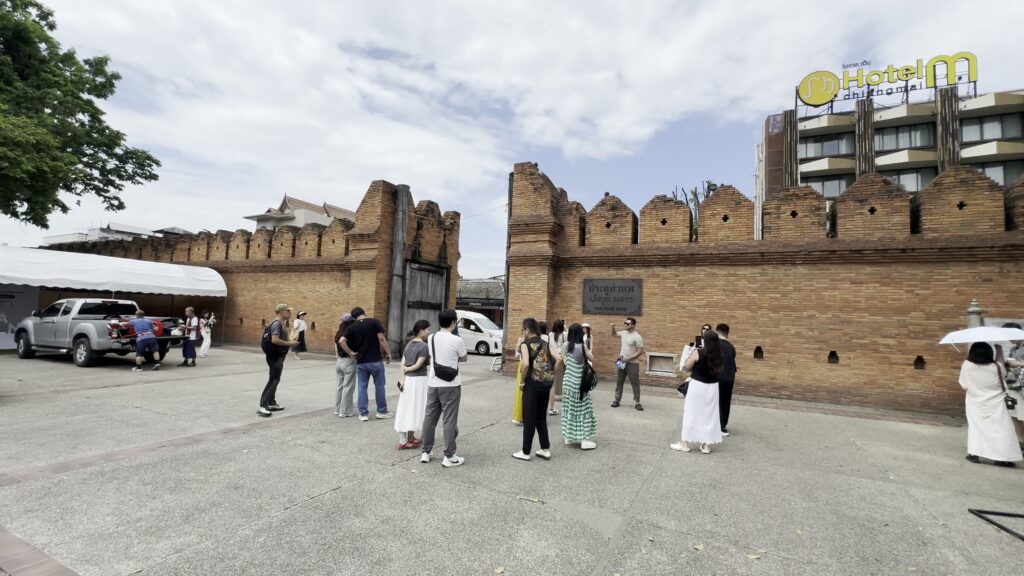
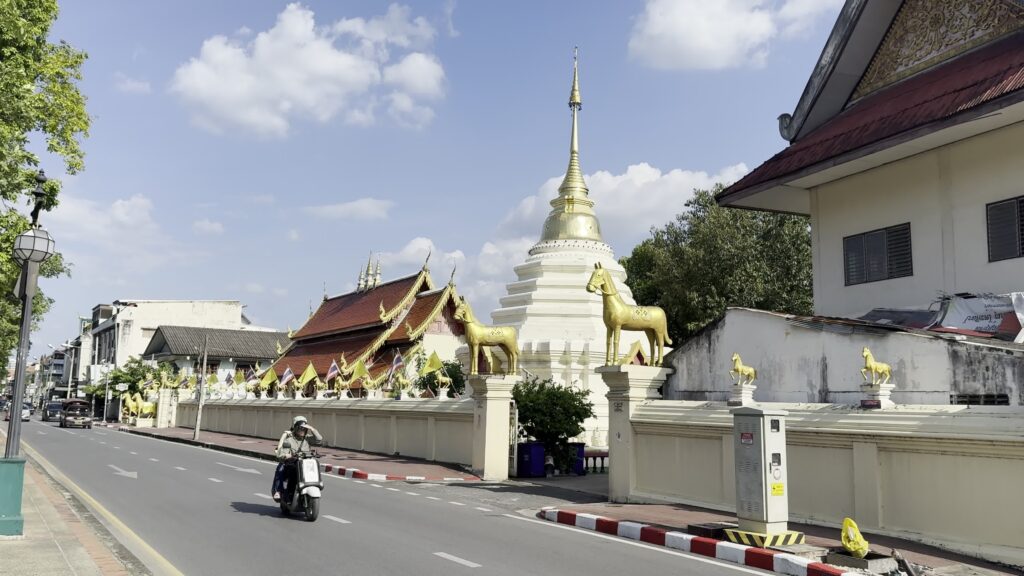
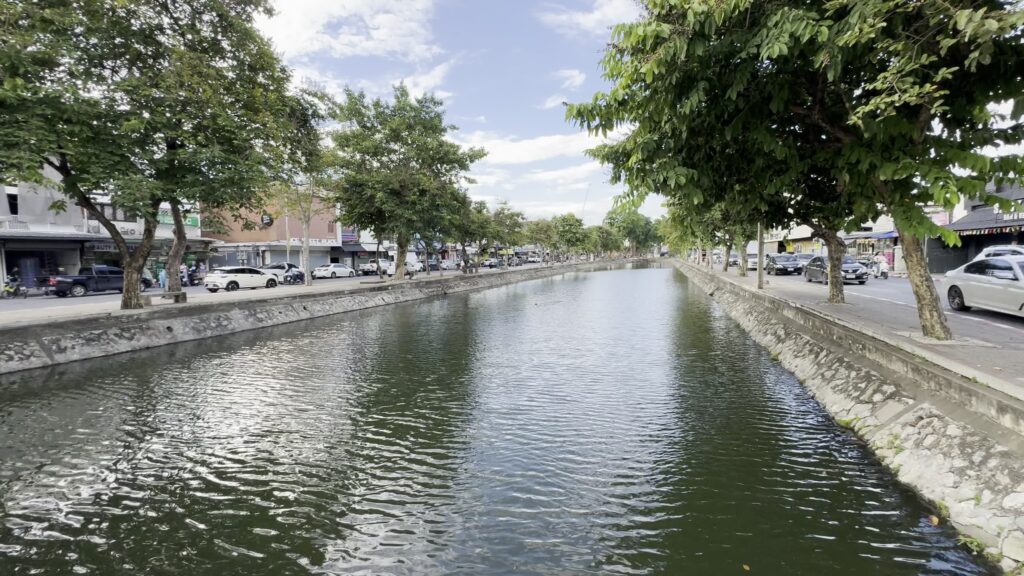
Chiang Mai is an exciting city. I can see exactly why people love both the short visits and the long stays here. The old town with its moat and scattered surviving stretches of wall. The countless Buddhist temples that define the whole area, right in the middle of the city, out in the surrounding districts, and in the towns further afield. The daily markets full of small, handmade souvenirs and local clothing.
Chiang Mai’s old town is big enough that you can’t just casually stroll across it, but on the other hand it’s not so big that it needs a proper expedition to tackle. Water bottle in my backpack, I’ve waded across the moat and into the densely packed old town more times than I can count. I prefer the small alleys. They’re usually quieter, and there’s something charming about turning a corner and suddenly being met with the spectacle of a Buddhist temple.
For anyone who loves food, Chiang Mai has a solid line-up. Even with three weeks here, I’m not going to eat my way around the entire city. But these days I do enjoy double-checking whether that Khao Soi from the guy on the corner really was as good as I remembered, or whether I just got lucky.
Chiang Mai’s old town has kept me entertained for days on end. The temples, the food and the markets make it a fairly compact yet varied experience. Perfect for wandering.
Remembering Thailand’s Markets
My parents took me and my little brother to Thailand several times as kids. It was many years ago, and I was very young, especially on the first trip. Even so, I’ve got hazy memories of places like Phuket, Koh Chang and Koh Kood.
I’ve still got old souvenirs sitting at home in moving boxes from exactly those holidays. New Year’s decorations, old flip-flops, a painting. The act of wandering around souvenir shopping itself has stuck with me as a strong memory. All those T-shirts with ridiculous slogans, like the one where Puma became Coma and the panther had a bandage wrapped round it.
I remember these stalls as being everywhere, with constant deals and things practically shoved into your hand in the hope you’d buy them. Part of that experience was, of course, being a kid who probably found it easier to talk their parents into spending money than the smiling Thai vendor did.
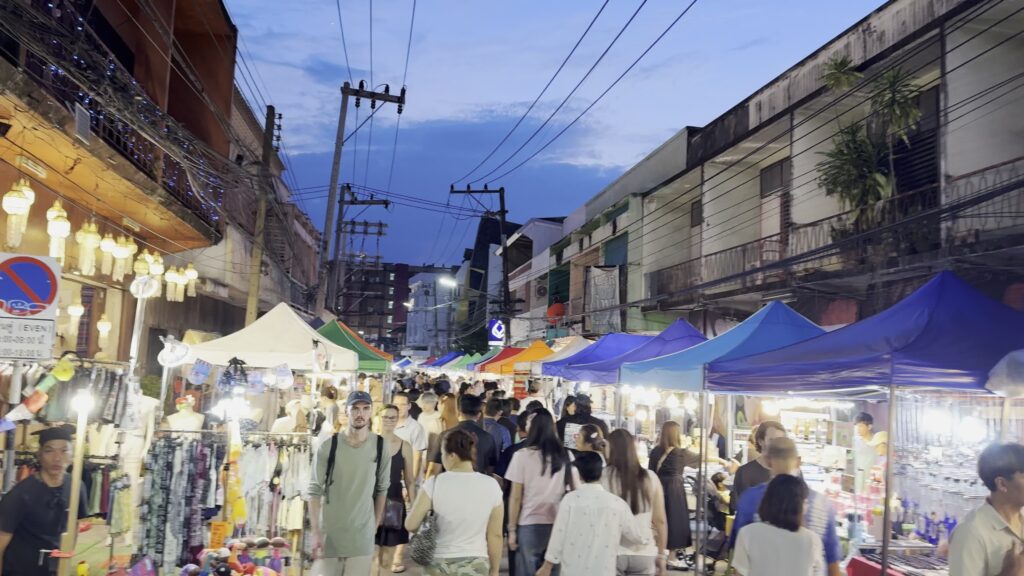
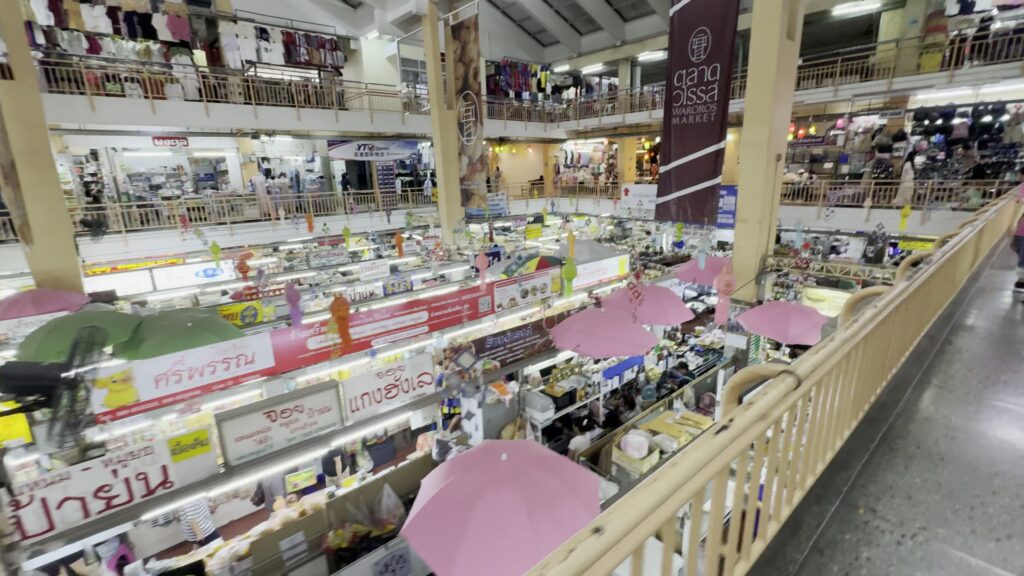
I split Chiang Mai’s markets into two categories: pop-ups and bazaars. The pop-up markets can sneak up on you. A street you walked down one day is suddenly packed with stalls and heaving with people. Typically, on weekends, various streets or a temple will have filled up with stalls. Piles and racks of clothes, everything from patterned T-shirts and trousers to little dresses and scarves. Interestingly, though, not the screen-printed T-shirts I remember.
Jewellery and knick-knack souvenirs you can always find, but at the pop-up markets it’s often a single stall that surprises you with something unique and genuinely local, something I haven’t already seen hundreds of times over across Southeast Asia.
Craft and art are a big deal in Chiang Mai. You see it in the shops and at the markets. There are lots of small, distinctive stalls and shops selling their own work. Unique T-shirt prints, paintings, bags with drawn portraits, hand-carved wooden figures, micro-embroidered figures and much more.
It’s a bit hard to separate the feeling from the reality, but interestingly enough it’s Vietnam and Bali where my memories of souvenir shopping have matched up best. Mass-produced toys and clothes. Suspiciously cheap Rolexes and smartphones.
Chiang Mai has that kind of market too. The big one is called the Night Bazaar, and that’s where you’ll find your dodgy printed T-shirts and sketchy knock-offs. This is where Thailand starts to feel like my old memories again.
Between the two types of markets, I run into the most Thai people at the pop-up markets. They seem to be just as much customers here as the tourists are. Then again, if I’d been looking at the same dumb printed T-shirts for twenty or thirty years, I’d probably favour the place where people actually had something new to show as well.
The Nimman Neighbourhood
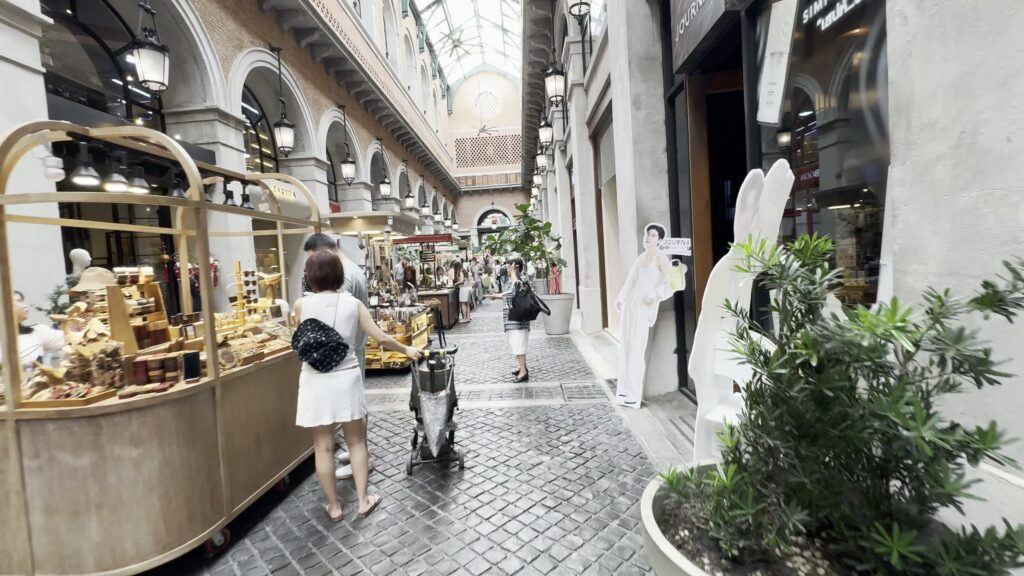
The Nimman neighbourhood sits half a kilometre west of the old town. It’s a thoroughly modern part of the city. Gone are the rough-and-ready stalls, replaced by polished shopfronts promising modern, high-quality, expensive goods. Several buildings are new or recently renovated. The architecture is varied and, frankly, a bit at odds with itself. Every building and shop is built like a sales funnel, complete with eye-catcher, pitch and product, baked right into the architecture.
I’ve seen this before. From Vietnam to Bali and again in Kuala Lumpur. The newer, wealthier parts of these countries keep getting bought up or reshaped by the same modern marketing playbook. It creates a striking contrast between the old town and the Nimman neighbourhood in just how much retail dominates the streetscape.
Nimman is pricier, but also more varied and an easier place to live if you’ve got the money. It’s also, quite simply, double or triple what things cost in the old town. I can walk a kilometre and find that my dinner suddenly costs half as much.
The best gauge of how expensive a neighbourhood is, is the price against 7-Eleven. If you can walk into a 7-Eleven and buy a soda for a fifth of what your restaurant is charging, you’re in the pricey part of town.
Life in Chiang Mai
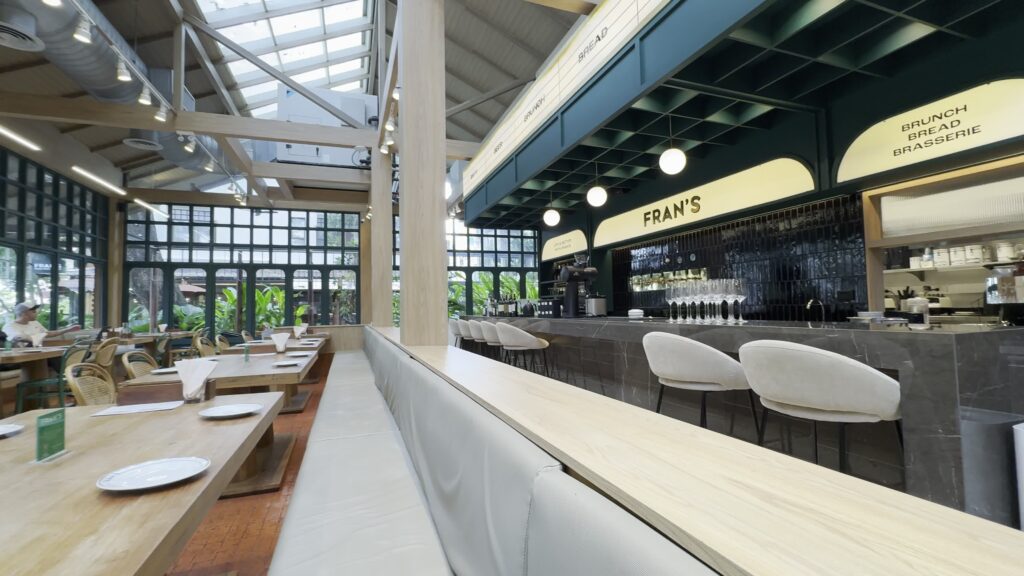
The cafés in Chiang Mai are pretty good. I still spend a big chunk of my days hopping from café to café. It keeps me a little bit active by giving me somewhere to head to, and it means I get to see parts of the city that plenty of people just breeze straight past.
My AI project is eating up a huge share of my focus and time. Even though the first version is done and running, I keep coming up with new ideas and features to add. The cafés help both with momentum and with keeping me from getting glued to the computer. My ability to hyperfocus on a project cuts both ways. I can genuinely get things moving, but at the same time I can also lose a lot of good routines and healthy habits once I get swallowed up by it.
I’ve managed to get out and go running a couple of times, for the first time in a month. It’s a bit more of a hassle while travelling than it is back home. It’s too hot to run midday or in the evening, so running has become a morning thing. I’ve only got three sets of running clothes on rotation, so I either run in dirty gear or make sure I plan a wash straight afterwards. But when I do manage to get out there, it’s usually a brilliant way to see corners of the city I haven’t been to yet.
Even though it’s monsoon season, I haven’t run into much trouble with the rain. There’s the odd fierce downpour now and then, but that just gives me a good excuse to duck into some shop I wouldn’t normally bother with.
Even though my first week and a half in Chiang Mai hasn’t been boring, I’ve mostly stuck to the city itself. There’s both Doi Suthep, the mountain resting on the edge of town, and the distant temple town of Chiang Rai, both of which I still want to visit before heading home. We’ll see if I can manage to pry myself away from my project for long enough to actually get out of the city.
Follow the journey
I'll send an email whenever new stories from the trip go up.
Want to support the journey? Read more here.